

Industrial Lubrication Pumps for Oil & Grease Delivery
Lubrication pumps provide the pressure and lubricant flow required to deliver oil or grease from a reservoir to the lubrication network. They are the driving component of centralized lubrication systems, supplying lubricant to metering devices, distribution blocks, and ultimately to bearings, gears, guideways, bushings, chains, pins, and other lubrication points.
-
![Centralized Automatic Lubrication Solutions]() Centralized Automatic Lubrication SolutionsOur Centralized Automatic Lubrication Solutions automatically deliver precise, timed doses of grease or oil to high-friction machinery components to minimize mechanical wear.
-
![Automatic Grease Pump System]() Automatic Grease Pump SystemOur Automatic Grease Pump System delivers metered lubricant to machinery friction points at predefined intervals. By eliminating manual greasing, it prevents human error, ensures optimal bearing...
-
![Pressure Grease Pump]() Pressure Grease PumpOur heavy-duty pressure grease pump utilizes an advanced automated piston mechanism to deliver high-pressure, continuous lubrication. Built with a robust reservoir and precision check valves, it...


Lubrication Pump Selection Guide
|
Requirement |
Recommended Direction |
|
Automatic industrial lubrication |
Electric lubrication pump |
|
Existing compressed-air infrastructure |
Pneumatic lubrication pump |
|
High-viscosity grease |
Grease lubrication pump |
|
Liquid oil lubrication |
Oil lubrication pump |
|
Machine tool application |
Electric oil lubrication pump |
|
Heavy industrial machinery |
High-pressure grease / oil pump depending on system |
|
OEM automatic lubrication |
Pump selected according to complete system design |
|
Replacement application |
Match lubricant, pressure, output, reservoir and interfaces |
Lubrication Pump Working Principle
Although pump constructions vary, the basic process is straightforward.
Lubricant Storage
Oil or grease is stored in the pump reservoir or an external lubricant container.
Lubricant Intake
The pump draws lubricant from the reservoir into the pumping chamber.
Pressure Generation
The pumping mechanism generates the pressure required to move lubricant through the centralized lubrication circuit.
Lubricant Discharge
Lubricant is discharged into the main lubrication line.
Distribution
The pressurized lubricant travels through metering or distribution components before reaching the lubrication points.
Control & Monitoring
The pump can operate according to a timer, machine signal, controller, or other control logic depending on the configuration.
Lubrication Pump Components
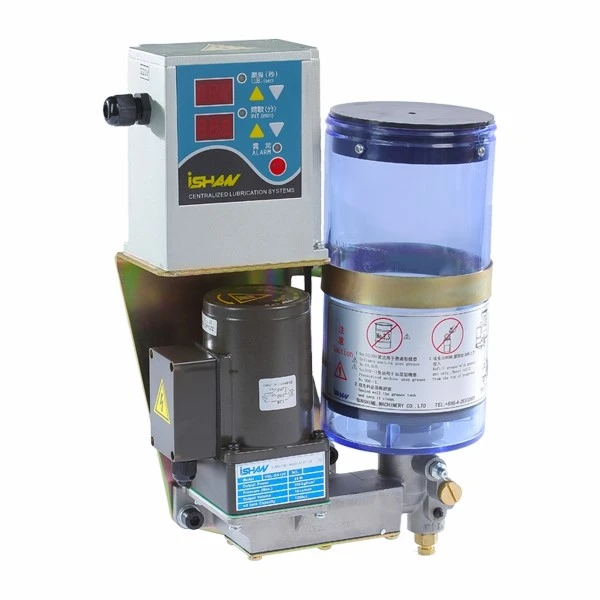
Pumping Mechanism: The pumping mechanism generates the pressure and lubricant flow.Depending on the pump design, different mechanisms may be used for oil or grease applications.
Reservoir: The reservoir stores the lubricant before it enters the pumping mechanism.Reservoir capacity should be matched to lubricant consumption and required maintenance intervals.
Drive Unit: Electric or pneumatic power drives the pump according to the selected configuration.
Pressure Relief: A suitable pressure protection arrangement can help protect the lubrication circuit against abnormal pressure conditions.
Outlet Connection: The outlet connects the pump to the main lubrication line.Connection specifications should match the downstream tubing and system components.
Control Components: Depending on the pump configuration, control components may include timers, switches, controllers, or monitoring interfaces.
Level Monitoring: Where applicable, lubricant level monitoring can help maintenance personnel identify when the reservoir requires refilling.
Lubrication Pump Applications
Machine Tools: Lubrication pumps supply oil or grease to guideways, bearings, slides, ball screws, and other designated points. Automatic lubrication reduces frequent manual servicing and helps maintain consistent delivery.
Construction Equipment: Centralized grease pumps supply distributed points on excavators, loaders, cranes, concrete equipment, and specialty machinery—reducing the difficulty of manual access.
Mining & Heavy Equipment: Heavy-duty equipment operating under high loads, vibration, dust, and demanding conditions. Pumps supply centralized systems serving bearings, pins, bushings, conveyor components, and heavy-duty moving assemblies.
Conveyors: Long conveyor systems with many bearings distributed across the equipment. A centralized pump supplies lubricant while reducing manual lubrication requirements.
Industrial Production Lines: Automated production equipment, packaging machinery, textile machinery, material handling systems, processing equipment, and assembly equipment.
Agricultural Machinery: Centralized lubrication pumps can be used in selected agricultural and off-road equipment where multiple grease points require regular maintenance.
Quality Control
A lubrication pump should not only look correct—it needs to deliver lubricant reliably under its specified operating conditions. Our quality control focuses on key performance areas.
Dimensional Inspection: Critical dimensions, mounting interfaces, threads, and connections are checked against applicable product specifications.
Component Inspection: Critical pump components are inspected before and during assembly.
Assembly Inspection: The correct installation of internal components, seals, springs, pumping elements, and connections is verified.
Functional Testing: Applicable pumps can be tested for pump operation, lubricant discharge, flow/output, pressure response, operating stability, and control function.
Leakage Inspection: Relevant pump assemblies and connections are checked for leakage according to applicable product requirements.
Final Inspection: Before shipment, finished pumps are checked for model, quantity, appearance, dimensions, connection condition, functional status, product identification, and packaging.
Quality Documentation: For applicable products and project orders, supporting documentation may include inspection records, test reports, product specifications, material documentation, quality certificates, and factory inspection documents.
Lubrication Pump Ordering Process
01 — Send Your Requirements
Tell us the lubricant, equipment, required quantity, and existing pump information.
02 — Pump Evaluation
We evaluate pressure, output, reservoir, power source, and connection requirements.
03 — Product Recommendation
A suitable pump model or configuration is recommended.
04 — Quotation
We provide pricing, availability, lead time, shipping options, and applicable commercial terms.
05 — Specification Confirmation
Model, quantity, specifications, packaging, and delivery requirements are confirmed.
06 — Production & Inspection
Products are manufactured and inspected according to the confirmed order.
07 — Shipment
The finished products are packed and shipped using the agreed transportation method.

Why Buy Lubrication Pumps from Ishan?
Zhejiang Shengxiang Machinery Co., Ltd., established in 2001, is the mainland China branch of Taiwan ISHAN Precision Machinery Industry Co., Ltd. Specializing in advanced centralized lubrication systems, we offer customized design, products, and services backed by decades of expertise. Our ISO-9001 and CE-certified products are trusted by leading domestic firms and exported to over ten countries across Europe and the Americas, with strong market recognition and a solid international reputation.
Packaging & Shipping
Lubrication pumps are packaged according to product size, weight, configuration, and transportation requirements.
Packaging Options
Export Cartons: Suitable for standard pumps and smaller orders.
Pallet Packaging: Suitable for multiple pumps and bulk shipments.
Plywood / Wooden Cases: Suitable for heavy or larger pump assemblies.
Customized OEM Packaging: Available for distributor and OEM orders according to agreed requirements.
Shipping Methods
Sea Freight: Suitable for bulk and heavy shipments.
Air Freight: Suitable for urgent industrial orders.
Rail Freight: Available for selected international routes.
Certificates & Compliance
Certification and compliance documents can be provided according to the applicable product and project requirements.
ISO 9001:2015
CE Certification
RoHS Compliance
REACH Compliance
FAQ
As one of the most professional lubrication pump manufacturers and suppliers in China, our products have good reputation in the market. Please rest assured to buy durable lubrication pump made in China here from our factory. For price consultation, contact us.
Popular Products


