

Centralized Lubrication Systems for Industrial Machinery
Ishan provides centralized lubrication systems designed to automatically distribute lubricating oil or grease to multiple lubrication points on industrial machinery.
-
![Industrial Progressive Lubrication Systems]() Industrial Progressive Lubrication SystemsThe Industrial Progressive Lubrication System is an automated, centralized lubrication solution engineered for high-precision grease and oil delivery across multiple friction points. Utilizing...
-
![Precision Lubrication Systems]() Precision Lubrication SystemsPrecision Lubrication Systems are centralized lubrication solutions designed to deliver controlled quantities of oil or grease to multiple lubrication points on industrial machinery. The system...
-
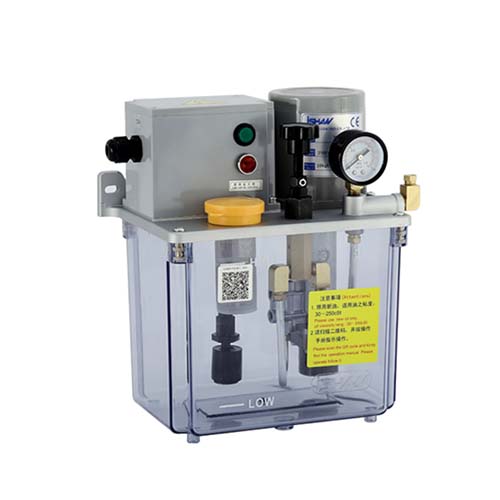
![Lubrication Pump Resistance]() Lubrication Pump ResistanceThe Lubrication Pump Resistance is engineered specifically for proportional resistance lubrication systems, this unit features a built-in automatic pressure relief mechanism to ensure system line...
-
![Positive Displacement Pump Resistance]() Positive Displacement Pump ResistanceEngineered specifically for extreme hydraulic resistance and severe system backpressure, the Positive Displacement Pump Resistance maintains linear flow efficiency where standard centrifugal pumps...
-
![Pump Resistance Control]() Pump Resistance ControlPump Resistance Control is a heating and temperature-control solution designed to maintain the required temperature of pumpable materials during pumping and process operation. It is suitable for...
-
![Piston Pump Systems]() Piston Pump SystemsPiston Pump Systems are positive displacement pumping systems designed for high-pressure transfer of water, chemicals, oils and other industrial fluids. The system uses reciprocating piston...
-
![Variable Positive Displacement Pumps]() Variable Positive Displacement PumpsVariable Positive Displacement Pumps are adjustable-displacement hydraulic pumps designed to regulate fluid output according to system requirements. Axial piston configurations are commonly used...
-
![Positive Displacement Pump System]() Positive Displacement Pump SystemOur Positive Displacement Pump System is an engineered industrial solution moving a fixed liquid volume per cycle. It forces a constant volumetric output regardless of pressure, making it the...
-
![Single Line Parallel Lubrication Systems]() Single Line Parallel Lubrication SystemsSingle-line parallel lubrication systems use intermittent pressurize-and-vent cycles and direct injectors to deliver pre-measured lubricant simultaneously to multiple friction points. If one line...
-
![Series Progressive Lubrication Systems]() Series Progressive Lubrication SystemsOur Series Progressive Lubrication System is a centralized automated solution that delivers precise grease or oil sequentially to multiple friction points via a divider block network, ensuring...
-
![Lincoln Progressive Lubrication System]() Lincoln Progressive Lubrication SystemEngineered for industrial reliability, the Lincoln Progressive Lubrication System delivers precise grease or oil to machinery while operating. Featuring built-in fault monitoring, it minimizes...
-
![Dual Line Lubrication System]() Dual Line Lubrication SystemEngineered for massive industrial complexes, the Dual Line Lubrication System uses alternating pressure headers and a heavy-duty pump to deliver precise grease or oil. Ideal for harsh...


Why Use a Centralized Lubrication System?
Consistent Lubrication: Deliver lubricant at defined intervals and quantities to help maintain a stable lubrication condition.
Reduced Manual Maintenance: Lubrication points can be connected to a centralized system, reducing the need for technicians to access individual points manually.
Reduced Lubricant Waste: Controlled lubricant delivery can help avoid excessive lubrication and unnecessary lubricant consumption.
Improved Equipment Reliability: Consistent lubrication helps reduce friction and wear on bearings, gears, guideways, bushings, chains, and other moving components.
Safer Maintenance: Lubrication can be delivered to difficult-to-reach or hazardous locations without requiring personnel to approach every lubrication point during operation.
Easier Monitoring: Depending on the system configuration, pressure, flow, cycle, or other operating conditions can be monitored to help identify lubrication problems.
How Does a Centralized Lubrication System Work?
Although different lubrication systems use different metering principles, the basic architecture is similar.
Lubricant Storage
Oil or grease is stored in a reservoir connected to the lubrication pump.
Lubricant Pressurization
The pump draws lubricant from the reservoir and supplies it to the centralized lubrication network.
Lubricant Distribution
The main supply line carries lubricant from the pump to the metering or distribution devices.
Flow Metering
Metering devices regulate or divide the lubricant according to the specific system design.
Point Lubrication
Lubricant is delivered through feed lines to bearings, gears, guideways, chains, bushings, slides, and other lubrication points.
Control & Monitoring
A timer, controller, pressure switch, sensor, or machine PLC interface can be incorporated depending on system requirements.
Which Lubrication System Is Right for Your Equipment?
Choosing a centralized lubrication system should start with the machine and lubrication requirements, not simply the product name.
|
Requirement |
Recommended System |
|
Simple centralized oil lubrication |
Resistance System |
|
Defined lubricant quantity at individual points |
Positive Displacement System |
|
Sequential multi-point distribution |
Progressive System |
|
Large number of points / long piping distance |
Dual Line System |
|
Machine tool guideway lubrication |
Resistance / Positive Displacement |
|
Construction and mobile equipment |
Progressive / Dual Line |
|
Large industrial machinery |
Dual Line / Progressive |
|
OEM machinery integration |
System selected according to application |
Complete Centralized Lubrication System Components
A centralized lubrication system is more than a pump.A complete solution includes:
Lubrication Pumps
Provide the pressure and lubricant supply required by the system.Available configurations depend on the application and lubricant type.
Reservoirs
Store oil or grease and supply the pump.Reservoir capacity can be selected according to lubrication frequency, lubricant consumption, and maintenance intervals.
Metering Devices
Control or distribute lubricant to individual lubrication points.Different metering principles are used in resistance, positive displacement, and progressive systems.
Distribution Blocks
Organize multiple lubrication outlets and simplify system installation.
Tubing & Hoses
Connect the pump, metering devices, and lubrication points.
Lubrication Fittings
Provide secure connections between lubrication lines and machine components.
Pressure Gauges & Switches
Monitor system pressure and help identify abnormal operating conditions.
Controllers & Timers
Control lubrication intervals and can interface with machine control systems where required.
Monitoring Components
Depending on the system, pressure, flow, cycle, or other operating parameters can be monitored.
Applications
Machine Tools: CNC machines, lathes, milling machines, grinding machines, machining centers, guideways, slides, and bearings. Consistent lubrication helps protect precision components and reduce manual maintenance.
Construction Equipment: Excavators, loaders, cranes, concrete equipment, and specialty construction machinery. Particularly useful where lubrication points are distributed across moving equipment and difficult to access.
Mining & Heavy Equipment: Crushers, conveyors, mining machinery, heavy-duty mobile equipment, and material handling systems—operating under high loads, dust, vibration, and demanding conditions.
Steel & Metal Processing: Rolling mills, conveyors, presses, material handling systems, and production machinery. Dual line or high-capacity configurations may be considered for large installations.
Cement & Aggregate Equipment: Crushers, conveyors, grinding equipment, kiln-related machinery, and material handling equipment. Reduces manual servicing across large equipment installations.
Conveyors: Numerous bearings and moving components distributed over long distances. Progressive or dual line systems may be used depending on conveyor configuration.
Manufacturing & Automation: Production lines, packaging equipment, textile machinery, automated machinery, material handling systems, and robotics-related equipment.

Manufacturing Process
Reliable lubrication performance depends on consistent component dimensions, proper assembly, sealing integrity, and functional testing. Our manufacturing process covers key production stages from component preparation through final inspection.
Production Workflow:
Material & Component Preparation → Precision Machining → Cleaning → Component Assembly → Functional Testing → Final Inspection → Packaging


Quality Control
Incoming Quality Control
Applicable materials and purchased components are checked against product requirements before production.

In-Process Inspection
Critical dimensions, machining quality, threads, interfaces, and other relevant features are inspected during production.

Assembly Inspection
Components, seals, springs, pistons, metering elements, and connections are checked for correct assembly.

Functional Testing
Applicable products and assemblies can be tested for operating function, lubricant delivery, metering performance, pressure response, reset operation, and leakage.

Final Inspection
Before shipment, products are checked for model verification, quantity verification, appearance, dimensions, functional condition, product identification, and packaging.

Quality Documentation
For applicable orders, supporting documents may include inspection records, test reports, product specifications, material documentation, quality certificates, and factory inspection documents.
Why Choose Ishan?
Zhejiang Shengxiang Machinery Co., Ltd., established in 2001, is the mainland China branch of Taiwan ISHAN Precision Machinery Industry Co., Ltd. Specializing in advanced centralized lubrication systems, we offer customized design, products, and services backed by decades of expertise.
Packaging & Shipping
We provide export packaging and international transportation options for standard products, spare parts, OEM orders, and complete lubrication system projects.
Packaging Options
Export Cartons: Suitable for standard lubrication components and smaller orders.
Plywood / Wooden Cases: Suitable for heavy, large, or fragile equipment.
Pallet Packaging: Suitable for bulk shipments and warehouse handling.
Customized OEM Packaging: Available for qualified OEM and distributor orders.
Shipping Methods
Sea Freight: Suitable for bulk and heavy shipments.
Air Freight: Suitable for urgent orders and higher-value shipments requiring shorter transit times.
Rail Freight: Available for selected international routes.
Certificates & Compliance
Certification and compliance documents can be provided according to the applicable product and project requirements.
ISO 9001:2015
CE Certification
RoHS Compliance
REACH Compliance
FAQ
As one of the most professional lubrication system manufacturers and suppliers in China, our products have good reputation in the market. Please rest assured to buy durable lubrication system made in China here from our factory. For price consultation, contact us.
Popular Products


