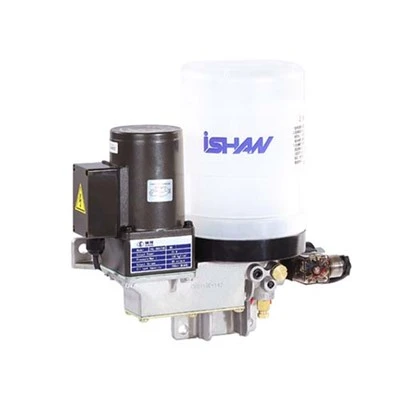
Engineered for massive industrial complexes, the Dual Line Lubrication System uses alternating pressure headers and a heavy-duty pump to deliver precise grease or oil. Ideal for harsh environments, it ensures continuous operation despite blockages.
Technical Specifications
Manufactured in accordance with ISO 9001 standards, with CE compliance and optional ATEX/IECEx certifications for explosive-risk environments.
|
Technical Parameter |
Specification Range & Details |
|
Flow Rate |
1.0 to 30 kg/h (depending on pump displacement and motor speed) |
|
Max. Operating Pressure |
Up to 400 bar (approx. 5,800 psi) |
|
Lubricant Viscosity |
Oils (from ISO VG 68) and Greases up to NLGI Grade 3 |
|
Operating Temperature |
-30°C to +80°C (Special low/high-temperature element options available) |
|
Main Line Pipe Size |
Typically OD 18mm to 25mm heavy-wall seamless steel tubing |
|
Electrical Supply |
380V/415V AC 3-Phase (Standard), custom voltages upon request |
System Configurations & Variations
Electric Motor-Driven Packages: Standard for fixed industrial facilities requiring automated, scheduled lubrication intervals via plant PLCs.
Pneumatic & Hydraulic-Driven Units: Ideal for mobile applications or remote sites lacking stable electrical infrastructure.
Multi-Pump Skids: Redundancy setups featuring dual pumps (one active, one standby) coupled with automated switchover valves for critical 24/7 continuous-production plants.
System Functions
Automated Cycle Management: Programmable logic controllers handle adjustable pause and run intervals, protecting pumps from dry-running.
Pressure Reversal Logic: Monitors end-of-line pressure switches to ensure complete system pressurization before initiating line-switching sequences.
Fault Detection & Alarms: Instantly flags pipeline blockages, low reservoir levels, or low-pressure faults, sending warning alerts to plant SCADA interfaces.
Applications
Steel & Metal Processing: Blast furnaces, continuous casting strands, rolling mills, sintering plants, and heavy material handling cranes.
Mining & Mineral Processing: Large-scale Jaw and Cone crushers, grinding mills, ore classifiers, and heavy conveyor belt systems.
Cement & Power Generation: Kiln support rollers, raw mills, coal pulverizers, and heavy turbine auxiliary setups.
Marine & Port Facilities: Container crane slewing rings, ship loaders, unloader booms, and massive winch mechanisms operating in corrosive saline air.
Customization Options
Custom Reservoir Sizes: Heavy-duty fabricated steel tanks ranging from 50L to 400L with pneumatic stirring paddles for heavy greases that tend to separate or channel.
Material Selection: Full stainless steel (SS304 / SS316) construction for corrosive marine environments or harsh chemical processing washdowns.
Advanced Monitoring Panels: Integrated explosion-proof (Ex-proof) control enclosures, ATEX certifications, and customized fieldbus communication (ProfiNet, Modbus RTU) for centralized control room oversight.
Pump Materials & Construction
Reservoir & Skid Frame: Heavy gauge structural steel, epoxy-coated or hot-dip galvanized to withstand corrosive industrial environments.
Valve Bodies & Spools: Forged carbon steel or nickel-plated brass with hardened, precision-lapped internal spools to eliminate internal fluid bypass under extreme pressures.
Seals & Gaskets: High-grade polyurethane, Viton (FKM), and NBR elastomers engineered to withstand continuous high-pressure cyclic stress.
FAQ
Hot Tags: dual line lubrication system, China dual line lubrication system manufacturers, suppliers, factory